












Recent Results in November 2025
Latest DATA FROM the advanced in-the-wild malware test
Summary of November 2025
tested
solutions
unique
SAMPLES
malware hosted over HTTP
malware hosted over HTTPS
average malicious changes [1]
PRE-LAUNCH level prevention
POST-LAUNCH level protection
average blocked malware [2]
Potential data breaches
Average Industry
Remediation Time
* based on data telemetry
The quickest average remediation time
[2] Average blocking of malware by all tested solutions, regardless of level of prevention or protection.
- Remember! HTTPS protocol can be used to host malware! SSL certificate and the so-called padlock at the web address does not certify safety of the website.
TOP 3
HIJACKED SERVERS LOCATION
TOP 3
TLD COMPROMISED DOMAINS
.com
.dev
.sbs
LOLBins in statistical terms
Legitimate and trusted software and built-in components in Windows are often used by cybercriminals to hide malicious activity. The so-called “Living off the Land Binaries” (LOLBin) are necessary for the proper functioning of the operating system. During a cyberattack, it can be difficult or impossible to block them, making them a very attractive method for malware developers. Below we present the most commonly used LOLBin in this edition of the test.
Malware Comparison Table in November 2025
The following summary shows a comparison of tested solutions to protect workstations against malware. We encourage you to become familiar with a detailed description and read our testing methodology in order to understand the results.
PRE-LAUNCH: The classification concerns detecting malware samples before they are launched in the system.
POST-LAUNCH: The analysis level, i.e. a virus has been run and blocked by a tested product.
FAIL: The failure, i.e. a virus hasn’t been blocked and it has infected a system.
Sandbox Column: Number of indicators, i.e. malicious changes made to the system without the anti-virus installed.
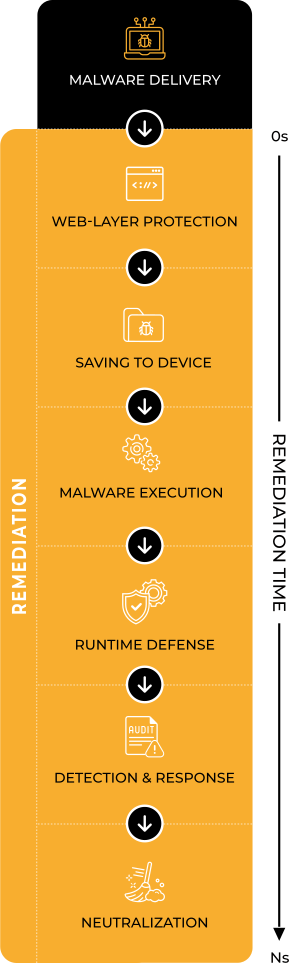
Automatic Average Remediation Time (RT): The time expressed in seconds counted from the introduction of malware into the system by the browser, through the launch to the detecting and resolving a security incident.
Certificates are granted to solutions that are characterized by a high level of security, with a rating of at least 99% of blocked threats in the Advanced In-The-Wild Malware Test.
Our tests comply with the guidelines of the Anti-Malware Testing Standards Organization.
Details about the test are available at this website as well as in our methodology.
Recent Results in November 2025
enterprise products
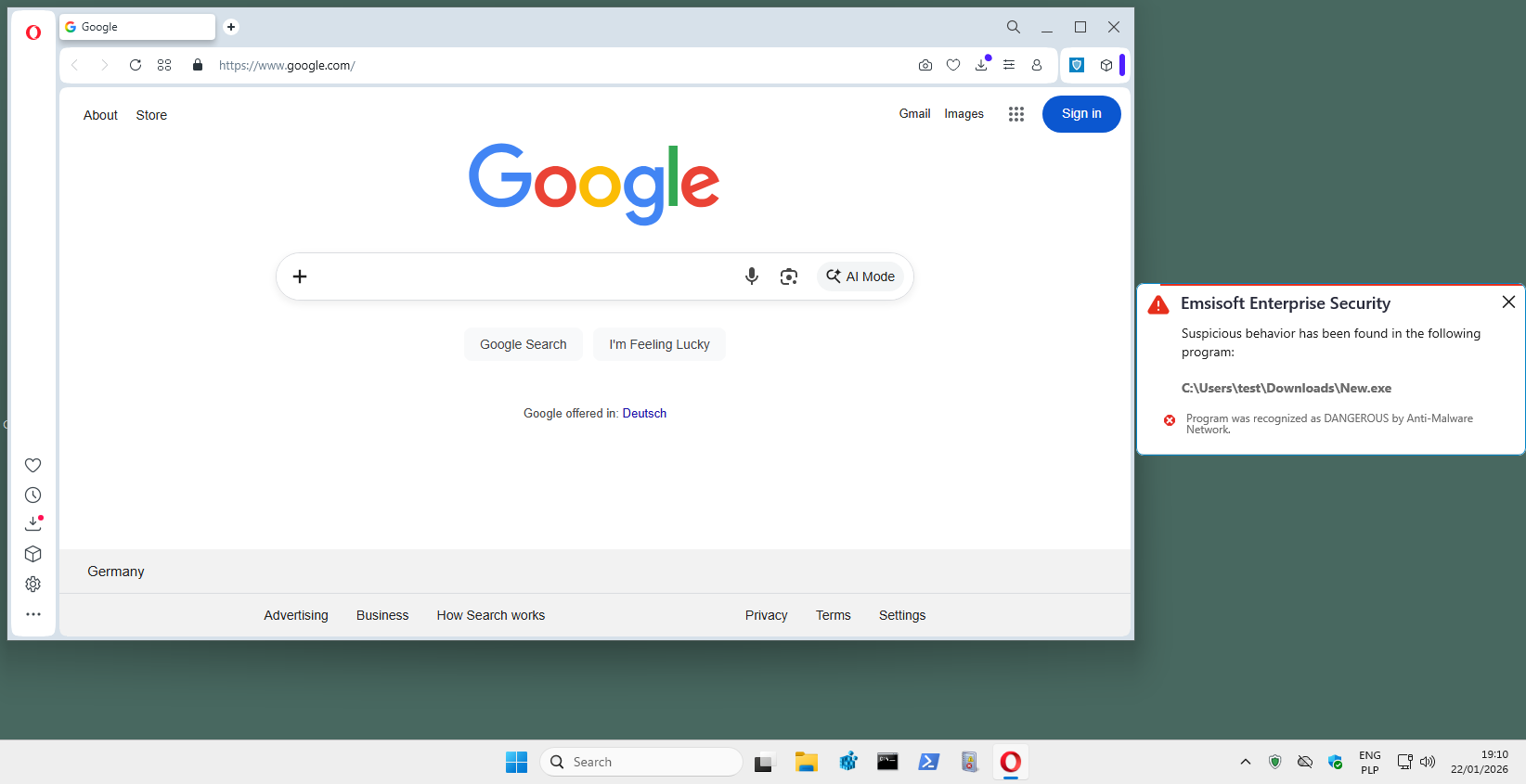
Emsisoft Enterprise Security + EDR
Blocked: 244/244
Total: 100%
RT: 1.752 seconds
mks_vir Endpoint Security + EDR
Blocked: 244/244
Total: 100%
RT: 9.3 seconds
ThreatDown Endpoint Protection + EDR
Blocked: 244/244
Total: 100%
RT: 8.013 seconds
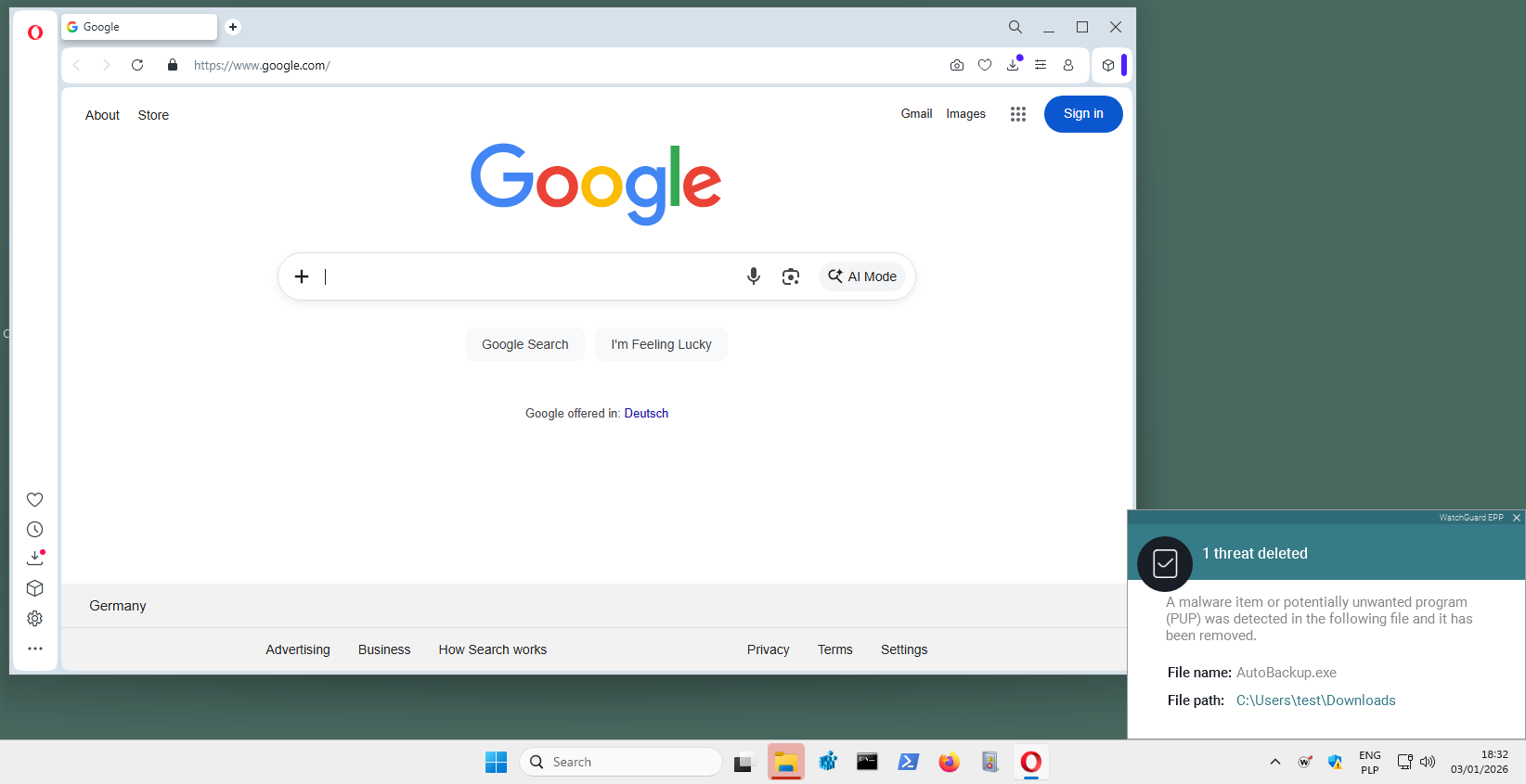
WatchGuard Endpoint Security
Blocked: 222/224
Total: 99.18%
RT: 32.6 seconds
FAIL: 2
home products
Avast Free Antivirus
Blocked: 244/244
Total: 100%
RT: 8.094 seconds
Bitdefender Total Security
Blocked: 244/244
Total: 100%
RT: 0 seconds
Eset Smart Security
Blocked: 244/244
Total: 100%
RT: 0 seconds
F-Secure Total
Blocked:244/244
Total: 100%
RT: 106 seconds
G Data Internet Security
Blocked: 244/244
Total: 100%
RT: 0.11 seconds
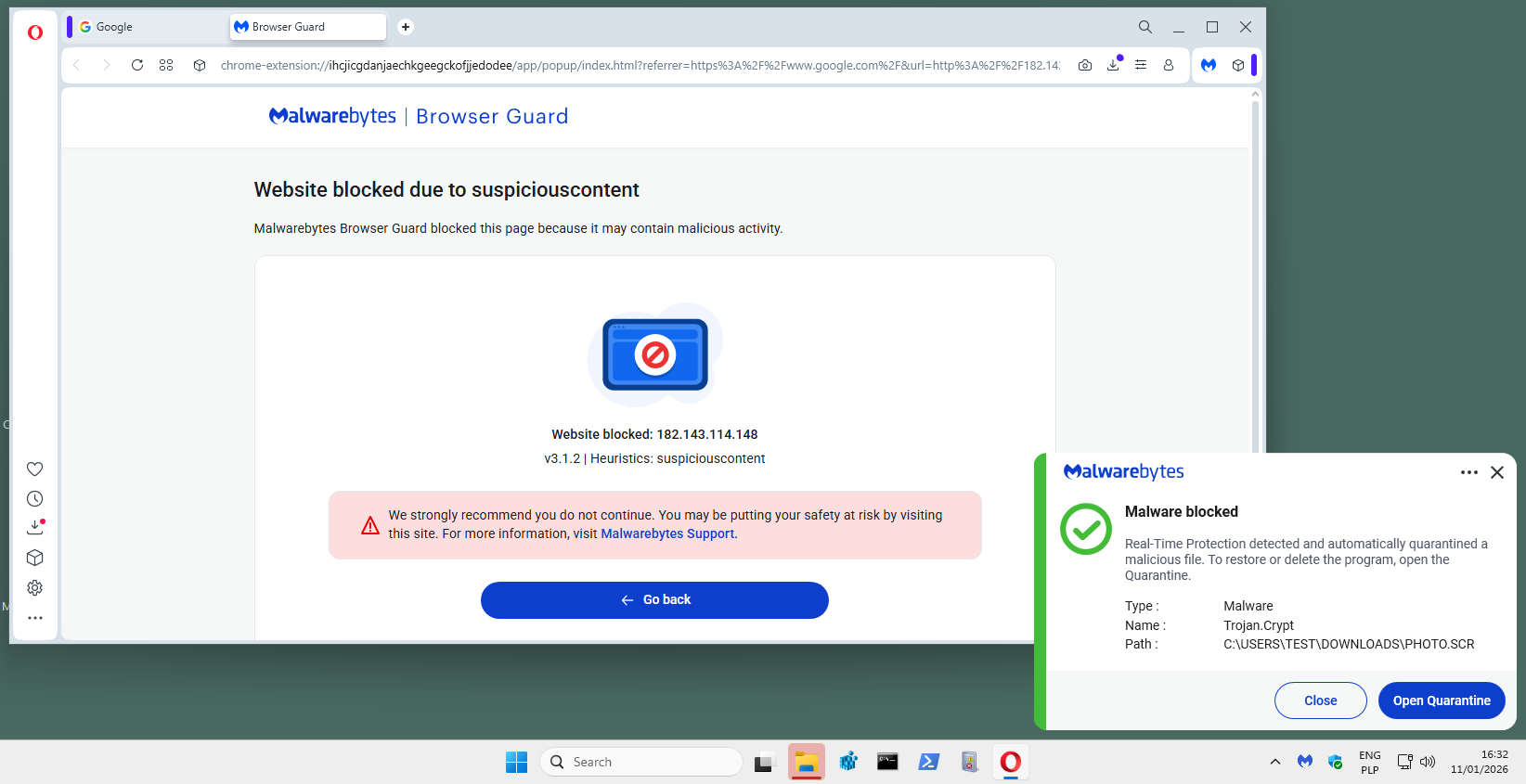
Malwarebytes Premium
Blocked: 244/244
Total: 100%
RT: seconds
Microsoft Defender
Blocked: 244/244
Total: 100%
RT: 1.342 seconds
Norton Antivirus Plus
Blocked: 244/244
Total: 100%
RT: 1.657 seconds
Trend Micro Internet Security
Blocked: 244/244
Total: 100%
RT: 0.192 seconds
Webroot Antivirus
Blocked: 244/244
Total: 100%
RT: 33 seconds
Related Publication in Details
Dive into our latest publication, dedicated to security test against malware. Uncover analyses, methodology, and results that provide invaluable insights into the latest edition of the Advanced In-The-Wild Malware Test.
See the previous results
You can always go back in time and check how each individual security product performed during previous editions of the test. We make the results from all previous tests available to you to verify if your favorite developer has improved protection against latest malware in his security software.